
MEET STEVE & ANGEL SHEETS
The Founders of GG's House Giving Grace
The lives they were already living.
One of the first things you notice about Steve and Angel is that they do not spend much time talking about themselves. If you ask about GG's House, the conversation rarely stays on them for long. Before long, they are talking about a veteran, a family, a volunteer, one of their boys, or one of the grandkids. Someone else always seems to become the important part of the story.
After spending time with them, you begin to realize that GG's House did not change who Steve and Angel are. It simply gave them a bigger place to live the lives they were already living.
Long before there was a garage full of donations or a nonprofit, and long before anyone imagined restoring a campus, there was simply a husband and wife raising three boys. Caring for their family shaped what they worked for, what they sacrificed, and how they measured a good life. They did not do it perfectly, but they did it intentionally.
Steve had learned some of that long before he had sons of his own. As a boy, he could disappear into a day of fishing, and his grandmother worried enough to invent mealtimes.
When she needed him back where she could see him, she would call out that breakfast, lunch, or dinner was ready. Steve would reel in, come back, and ask, "Where's the food?" She had not started cooking. She just wanted him close.
He spent those same years watching his father learn whatever the next piece of work required. Cars came first, then tires, towing, and salvage. Steve sanded, cleaned, and detailed while his father kept figuring out what could be built from the next opportunity.
Once, his father warned a customer about an engine even though the warning might cost him the sale. The customer told him that being nice was not the reason he kept coming back; he came back because Steve's father told him the truth. Steve remembered that too.
Steve rarely tried to teach his boys by giving speeches. Most of the important lessons happened while they were simply doing life together: leaving before daylight in Idaho, loading into the truck to go gopher trapping, working because work needed to be done, showing up because people were counting on them, and keeping their word because once it is lost, it can be almost impossible to earn back.
Those mornings were not really about trapping gophers. They were about becoming men. His sons did not just hear those lessons; they watched them.
One of them described his dad in a way that probably explains Steve better than Steve ever would himself.
"You can call Dad at three in the afternoon or three in the morning, and you'll get exactly the same response in exactly the same tone."
Whatever the hour, his answer was the same: "What do you need?" There was no frustration or hesitation, no reminder later that you owed him something, and no keeping score. Instead, he would ask, "What can I do?"
The same son said one of the greatest lessons his father ever taught him was not really spoken at all. He learned how to treat a woman simply by watching the way his dad loved his mom: quietly, consistently, for nearly forty years, and without expecting recognition.
Steve has spent years preaching about faith, but the people closest to him would probably say they learned even more by watching him than by listening to him.
If someone wronged him, he rarely turned to anger. If someone needed help, he showed up anyway, even if they had given him every reason not to. He simply believed people were worth another chance.
Angel notices that steadiness. Her own mind can move from Plan A to Plan B to Plan C before everyone else has finished naming the problem; then, she says, comes the rest of the alphabet. She also knows that speed can carry a cost.
When she talks about the moments when she should wait longer, ask for advice, or pray longer, patience makes her think of Steve. "That would be Steve, not me," she says.

What Angel planted.
Angel's influence looked different. The youngest smiles when he talks about his mom. "Mom has always been free spirited," he says. She never really colored inside the lines, except when she actually picked up a pencil.
Then she could draw almost anything. She has always been an artist, but the greatest things she created were not drawings. They were the values she quietly planted in her boys.
Her boys remember those values in the language of ordinary life: be kind, notice people, help when someone needs it, speak gently, be passionate, and finish what you start.
Go outside. Play in the mud. Laugh often. Live as though tomorrow is not promised, because someday it will not be.
And maybe the lesson they remember most is that life is not about things. It is about memories.
The three boys Steve and Angel raised are adults now, with families of their own. Ask Angel what a perfect day looks like, and she probably will not describe a building, an event, or even GG's House. She will describe her three sons, her daughters-in-law, and all five grandchildren together, with the grandchildren running around while everyone else sits nearby talking and laughing.
Her sons, daughters-in-law, and grandchildren are not simply part of her life. They remain at the center of it.
Looking back now, it is easier to understand why. Angel does not remember childhood the same way many people do. The memories that stayed with her were not birthday parties or vacations; they were people: an older neighbor named Edith, someone who made cookies, someone who listened, and someone who noticed a little girl who often felt forgotten.
Years later, Steve's mother became another steady presence. Angel still describes her as the rock of the family, a woman whose faith was not loud but was simply lived every day.
Those ordinary people quietly shaped the woman Angel would become.
Angel is the first to admit that good intentions have not always made her careful. She can move too quickly and make a decision before she has fully thought it through. When she gets something wrong, she has sometimes wanted to walk away from it altogether.
But if the decision was hers, she tries not to hide behind the intention. She owns it, apologizes, changes what needs changing, and keeps moving forward.
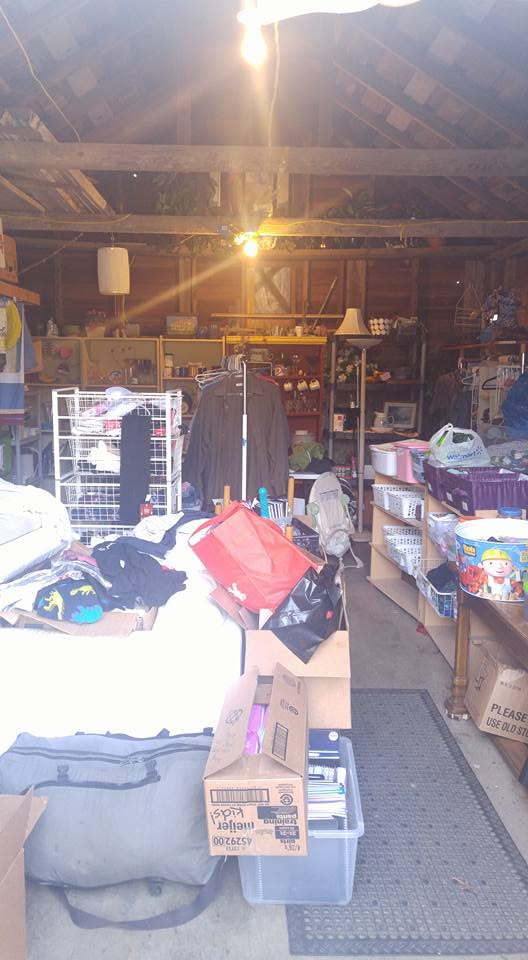
Years later, another ordinary moment changed her again. A woman returned to the GG's House garage carrying a backpack she wanted to donate. The zipper was broken, and Angel quietly wondered why anyone would donate something that seemed so worthless.
Later, she learned that the woman was homeless. That broken backpack may have been the nicest thing she owned.
Angel still tells that story because she never wants to forget what it taught her: you rarely know what something cost another person to give.
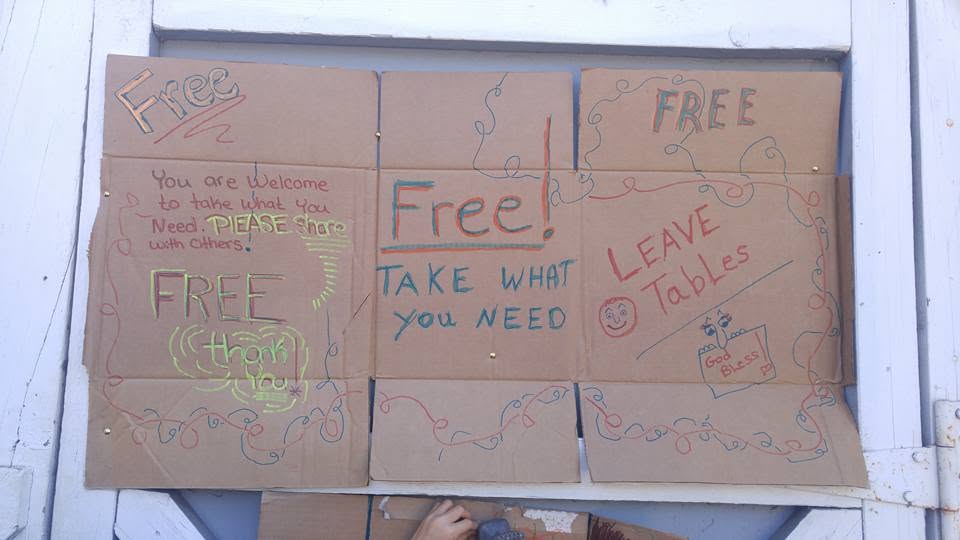
That lesson helps explain why Steve and Angel have spent so much of their lives seeing value where other people sometimes do not. They do not believe everyone has life figured out, but they believe everyone still has something worth offering.

The values finally had a name.
It is difficult to spend time with Steve and Angel without noticing how naturally they fit together. Angel notices people and what could become; Steve notices responsibility and quietly starts carrying out the plans. One dreams out loud, and the other goes to work.
Neither one would describe themselves that way, but if you spend enough time around them, that is the picture that slowly begins to appear.
Looking back now, it is tempting to say GG's House began in a garage, with a nonprofit, or perhaps with a dream. Yet the story seems to begin much earlier.
It began in quiet mornings before daylight and around family dinners. It took shape in a marriage that slowly taught three boys what integrity looked like, in a woman who believed memories mattered more than possessions, and in two ordinary people who spent decades living the values they hoped their children would carry forward.
Years later, those same values simply grew large enough to have a name: GG's House.
Once the work had a name, the old ways became easier for other people to notice. Tina knows there are mornings when Steve leaves home around three to pick up a load, and sometimes he loads the truck without a helper. There is no audience, only the next thing that needs to be carried.
She has also seen a quieter version of the same thing: work waiting while Steve stayed on the phone for hours with someone who needed him.
He did not hurry the person or remind them what else he had to do. He listened until they were finished.
Angel moves through the work differently. When a volunteer tells her, "I think you should do this," she often answers, "That's a great idea. Why don't you do that?"
Rather than taking over, she gives volunteers room to own their ideas and walks beside them, staying available to help. She does not need the shelves arranged exactly the way she would arrange them. What matters is that the result is safe, respectful, kind, and useful.
"Not everything has to be done my way," she says. That freedom leaves room for someone else's idea to become part of the place.
Years later, a mother approached Angel at a community event and asked whether she remembered her daughter. Angel did not, so the woman reminded her: her daughter's small sewing machine had broken, and Angel had given the girl a new one.
Angel barely remembered the gift. The mother remembered because, years later, her daughter had continued to sew. Something small had remained meaningful in the girl's life long after the moment itself had faded from Angel's memory.
"She's still sewing."

The work did not leave them untouched.
The work gave Steve and Angel a larger place to live the values they already carried.
Angel says GG's House brought her more peace, helped her heal, and made her less afraid of being herself.
She remembers a women's retreat where several women who did not know one another approached her with nearly the same message: be yourself. Angel's first reaction was honest. People did not always like her when she was fully herself.
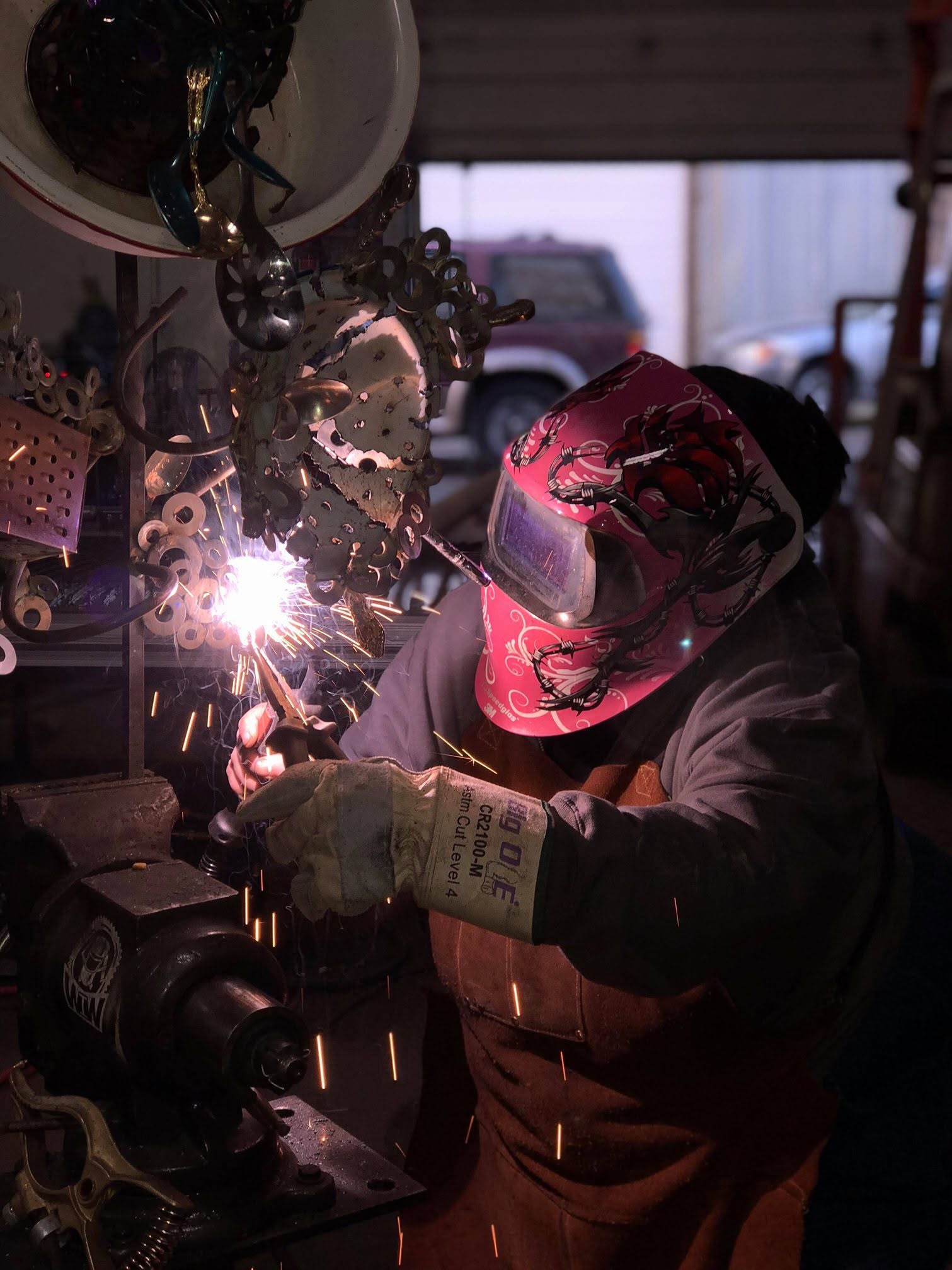
Her hair was different. Her clothes were different. Her words did not always arrive in the order other people expected. She would rather make art than clean house, and she still likes bubbles and playing in the mud with her five grandchildren.
For years, people told her to grow up. GG's House did not invent those parts of Angel; it gave her fewer reasons to hide them.
Angel has carried the image of a bumblebee for years: a creature that keeps flying even though the familiar saying insists it should not be able to. She recognizes herself in that persistence. Life gave her a difficult beginning and plenty of reasons to believe she might not succeed, but she kept moving anyway. For her, the bumblebee is a reminder that the circumstances a person is handed do not get to decide what that person can become.
Angel also laughs that staying in one lane has never been her strength. "In California, there are six lanes," she jokes. "At least I've narrowed it down."


Before the work had a name.
Years before anyone called Steve tireless, the family faced a move from Idaho to Oregon that they could not postpone. Money was tight, and one income could not cover another month in the fourplex. Steve was severely sick, and no one was available to help.
Between trips, he lay on the wooden floor, then got up, carried their belongings down two flights of stairs, loaded the modified 1970 GMC pickup, and kept going because the move had to happen.
Steve remembers the rule he followed that day: "You just pull everything within you and you make it happen." With rent due and a family depending on him, that was what he did.
They were leaving family and the home they knew, with no job waiting in Oregon. They packed their three boys and pulled what they owned behind them.
Steve's father gave them his camper trailer and said he believed God had told him to do it. For Angel, that was enough to keep moving, but it did not make the decision feel safe.
Near the end of the drive, with her family in the car and everything they had following behind them, the uncertainty became real enough that Angel panicked. They arrived anyway.
They spent their first Oregon winter in a camper that was extremely small for the family. Money remained tight, and the next housing they could afford was far from ideal.
After the cramped trailer, they moved into a house with a serious rat problem. It was not what they wanted, but it was what they could manage financially, and Angel still remembers being grateful that the family had made another step forward.
When Angel looks back, she does not describe them as fearless or certain. They were frightened and unsure what Oregon would hold, but they went together because they believed it was the next right step for their family.



A marriage they still have to protect.
Time did not turn that marriage into something effortless. Angel says it took her years to understand what she had in Steve, and longer to allow him to love her without preparing for the day he might leave.
She does not describe that as a lesson she finished. There is still work in it.
Once, Angel left for six months. She calls that period tragic. Looking back, she says the time apart made her understand what she actually had in Steve, and she believes the marriage became stronger through it. It was not untouched, but it was stronger.
Their marriage and the family they built together have remained at the center of their personal lives, but the desire to help other people can still become a burden they carry home. A birthday passes, or an anniversary arrives while someone else needs something. They spend a great deal of time together, but time in the same place is not always the same as choosing time for each other.
Angel is usually the one who wants to go somewhere or make a plan; Steve is happiest at home. That difference can frustrate her, but after all these years, she also recognizes it as one of the ordinary ways they are simply not the same.
This is not a marriage held together by matching instincts. Steve helps keep the appointments Angel loses track of, while Angel keeps reminding both of them that a life can become all obligation if nobody makes room to live it.
They have had to learn that loving people in public cannot replace choosing one another in private. It is a regret Angel still hopes they have time to avoid.
The steadiness was learned.
Steve's steadiness did not come from an uncomplicated life. He remembers conflict and violence at home, trouble of his own, and a direction that could have gone very differently.
He also remembers the people who kept praying for him, especially his mother and grandparents, when the direction of his life was uncertain. His mother listened without judgment, while his father taught him to meet practical problems by learning the next thing the work required.
Steve does not use faith as decoration on a good life. For him, prayer became part of finding another direction and continuing to choose it. The patience and steadiness people see now were developed over time; they were not effortless.

Success, in the family's eyes.
Steve tells the story of work differently. He did not choose one career and build a life around the title. He worked the job the family needed, learned the next thing, and then learned the thing after that.
He says he did not have careers; he had jobs. The distinction is not an apology. It is his measure.
If Angel and their boys were doing well, then Steve believed he was successful. It did not have to look successful to anyone else. Jobs, titles, and outside recognition were never the final measure; the well-being of his wife and children was. That quieter definition explains much of Steve's life: responsibility before recognition, usefulness before title, and family before applause.

She never told them the statistics.
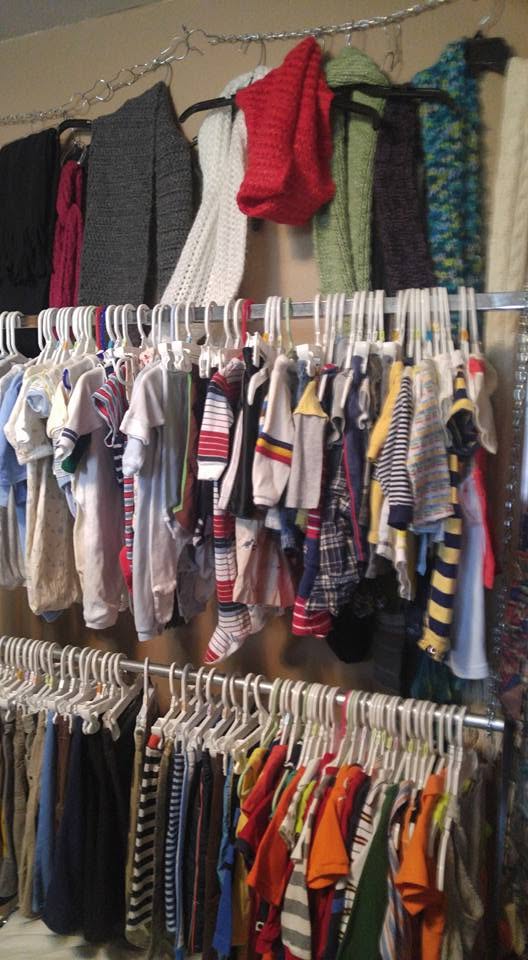
When Angel was twenty and raising three boys, people handed her the kind of statistics meant to predict a family's future: what poverty and limited education would pass down, and what the boys were supposedly likely to become.
Angel remembers one decision with pride.
She never told them.
She did not raise her sons by pretending hardship was unreal. She simply refused to teach them that hardship had already decided who they were.
Angel considers that refusal one of her greatest accomplishments: she never told her children, or anyone else she met, that they could not do something. The pride she feels now is not abstract; it is tied to the three men her sons became and the families they are raising.
Their mama sees it.
Years later, Angel sees the answer in ordinary moments. She sees one of her sons pull over in the cold and kneel beside a stranger's tires to put on snow chains. To Angel, it is a small picture of what carried forward: notice the need, use what you know, and do what you can.
Their three sons are adults now, with marriages, children, responsibilities, and lives of their own. Steve and Angel are proud of the men they have become and value the relationships they share with them as adults. They do not claim their sons are perfect or take credit for every good thing in them.
She notices the way her sons care for their own families and the way they treat people in ordinary encounters. Those everyday choices matter deeply to her.
The boys may not see every part of the pattern, but their mama sees it.

What they hope outlives them.
Neither Steve nor Angel can decide what every later generation will do.
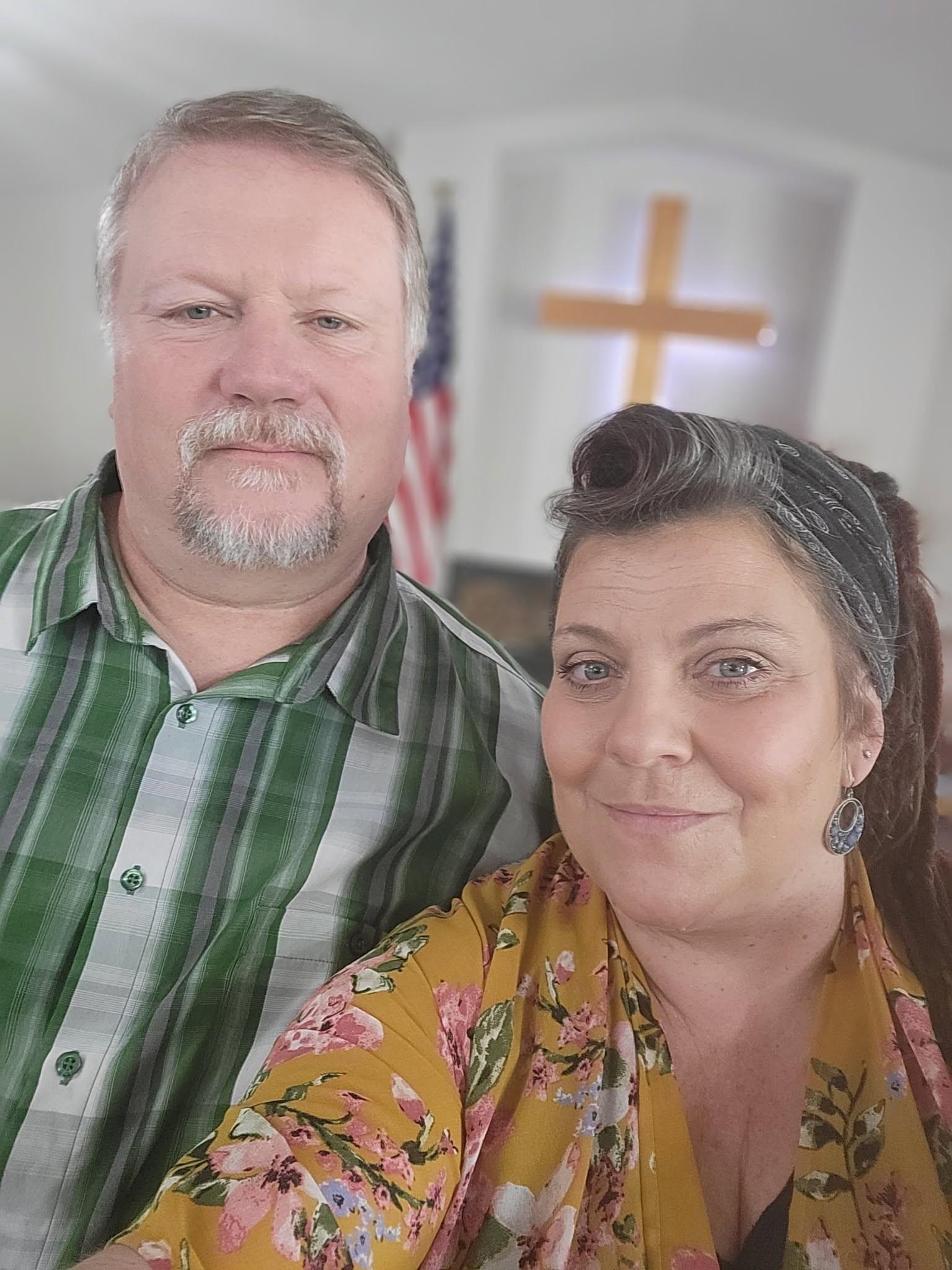
Their three sons, daughters-in-law, and five grandchildren are among the most important people in Steve and Angel's lives. That love does not mean the organization should automatically pass to their descendants. Angel does not want the children to inherit GG's House as an obligation. If one of them feels called and has the character, ability, and commitment to serve it well, that is different, but the family name is not the qualification.
The heart is.
She hopes someone may one day take the work farther than she could imagine. She also hopes a future building remains useful to the community: a place where people can learn what helps a life hold together, rather than a monument to the founders or proof that one family kept control.
It should remain a place that serves the people it was meant to serve.
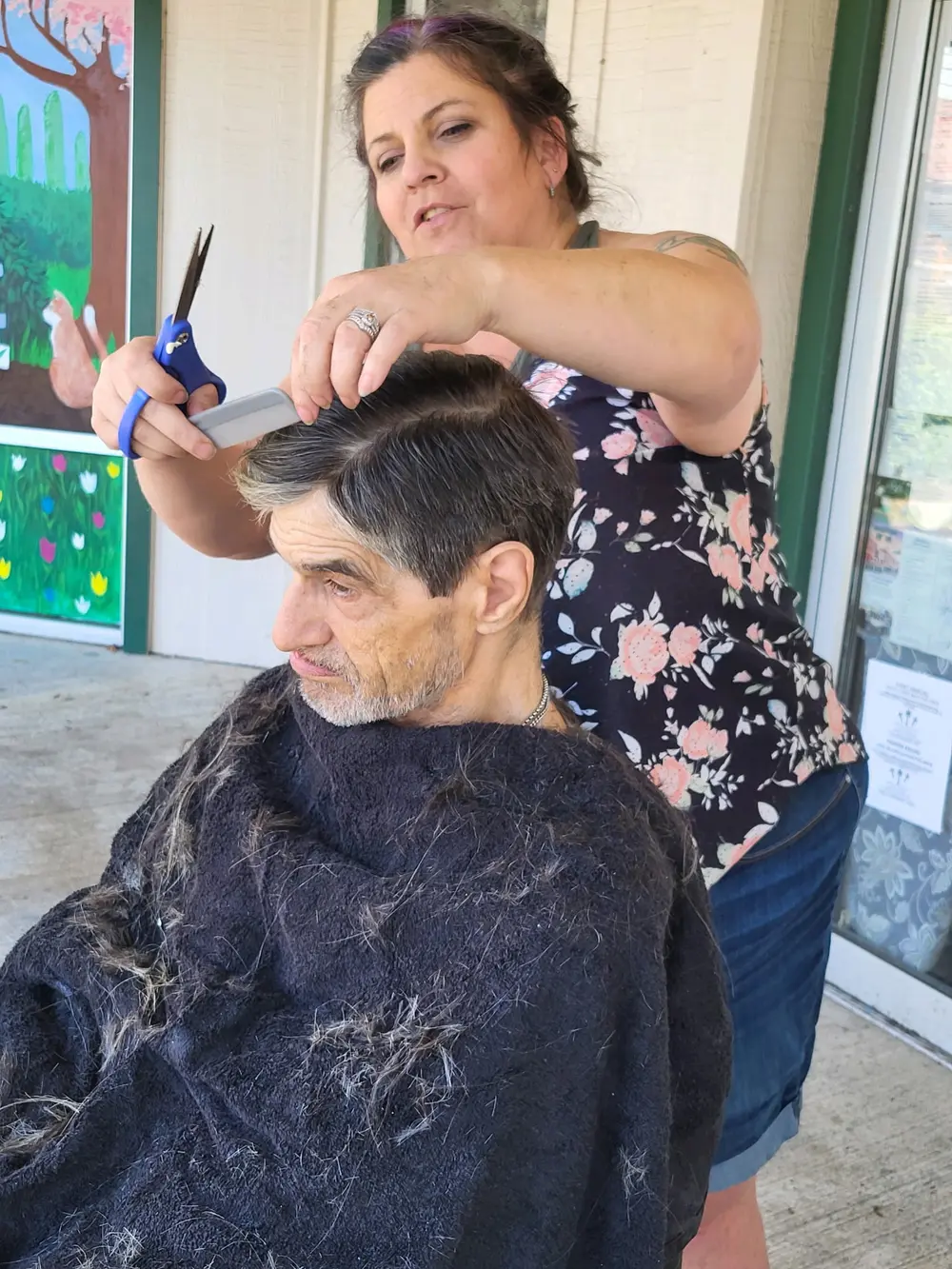
That hope is larger than a succession plan, but it is also smaller and more immediate: a door held open, a person listened to before anyone decides what they need, and a skill taught instead of an instruction handed down.
It is someone using what they have because they have learned that what they have matters. It is a family that keeps making room, a community that keeps noticing, and a place where what someone can give matters as much as what they need.
That is what Steve and Angel hope outlives them.
Not applause.
Not ownership.
Not a monument.
Just people who have learned that when a need is in front of you, you do what you can.
Then you leave room for the next person to do the same.
There's a place for you here.
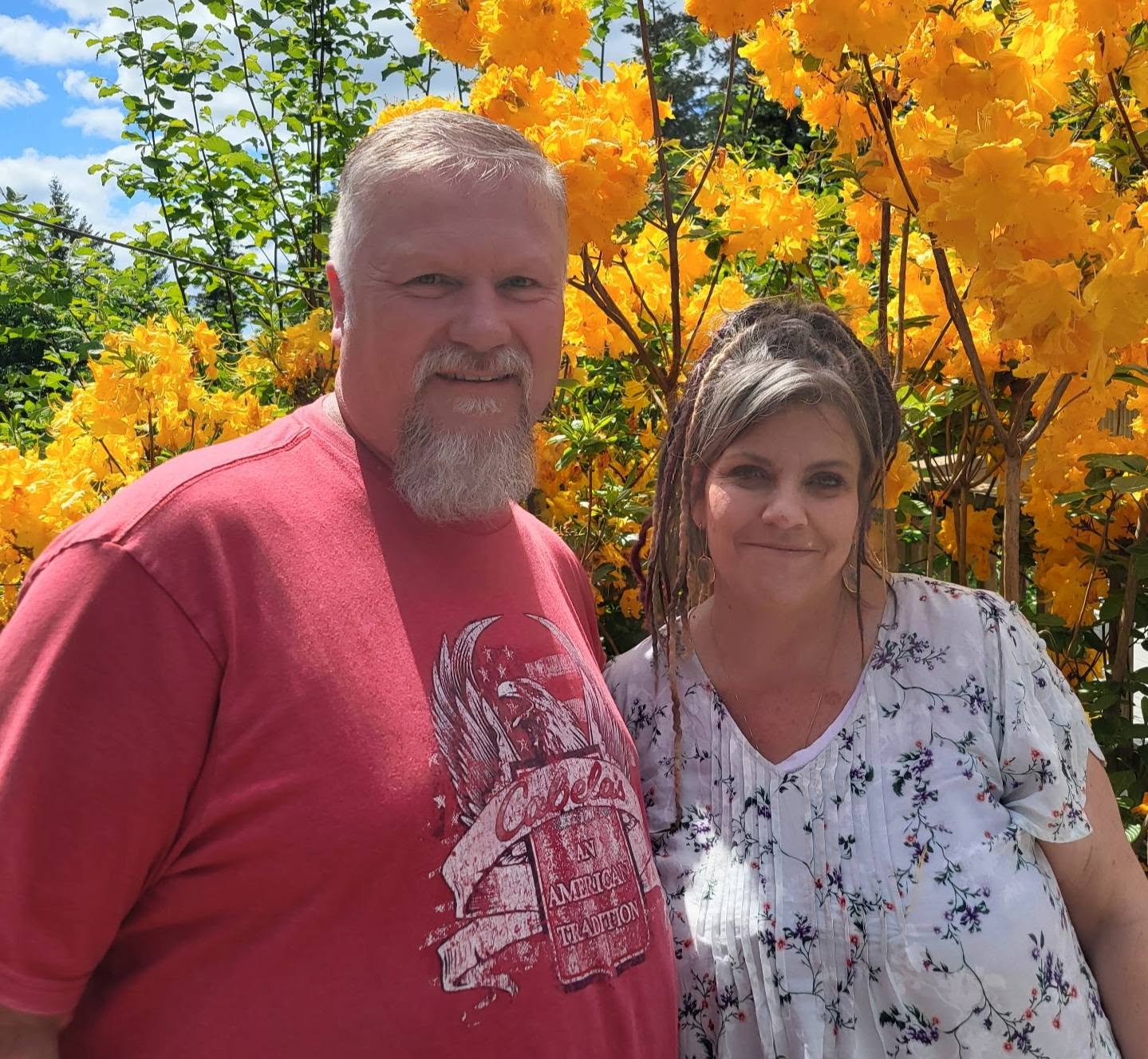
Whether you have an hour, a skill, a trade, or simply a willingness to help, tell us a little about yourself.